
Autism And Motherhood
Autism is now a $468 billion/ year industry. Money like that does the usual. It brings more blur than clarity. The current nonsense is one consequence. A review of what it is and isn't .
The reader is forewarned that this post has many digressions, but eventually does tackle autism with needed perspectives. Please be patient, or be prepared to skim. Autism is addressed here in a meaningful way, but the post also makes a strong argument for the importance of mothering.
A quick video to get a picture of this alarming disease, autism–the real one. Not what is being labelled as being on the autism spectrum. That diagnosis has little to do with autism. This is the best video I could find for seeing an actual child with the disease. The commentary on the video, exposes how out of it the parents and aides are, as they tragically try to put together a semblance of some kind of explanation for what is going on. The father is trying to be a good caring parent, cheerfully trying to connect. But he doesn’t have a clue. Nor would I. It is truly a horrendous heart breaking illness. In this video we see a boy whose coping skills are as bad as the disease can bring about. He has regressed to our earliest state of being, one that we ordinarily don’t consider human. Rather he resembles our animal ancestors.
(If you consider that last statement offensive because you believe you are autistic, you don’t have to worry. You’re not. Whatever it is you have been told you are (usually because of poor social skills) that has no relationship to the disease we observe in this child. Nothing!
The central characteristic of young children stricken with autism is that they seem to be in their own world,. They are unaware that other human beings exist. They aren’t necessarily continually alarmed as this boy is in the video, but even when subdued their ability to connect to others is severely impaired. They don’t understand other humans communications to them, nor how to make what they want known to others. Most pet dogs can better understand their masters . Too often others may as well be things, like they aren’t very different from a piece of furniture, a toy, or a fork. All of this this can be modified somewhat later on, but it takes a good deal of training to lessen the problem. Yes, there is a spectrum. Some are less destroyed and exhibit meaningful behavior. But that spectrum has nothing to do with “Aspergers” or ASD a supposed epidemic that has spread across America with alarming frequency and that has been connected to autism. To repeat. That connection is nonsense.
Instead of turning to others, or understanding situations that would be clear to someone without autism, they retreat into self comforting habits they have developed such as rocking back and forth, flapping their hands, making loud noises and the like. Later they may hum or count numbers. Some people with milder autism (the real variety) can actually use their mind like a computer, find satisfaction by exercising their brain to an extraordinary degree. They aren’t retarded. It’s relating to others that is broken. We have all heard of autistic people who can multiply complex numbers instantaneously, or have genius like abilities at the same time they seem out of it. Or people like Temple Grandin who has been innovative in her ideas about what it must feel like to be a herded animal. She has used her unusual mind to be accordingly constructive in the livestock industry. She demonstrates that someone with milder autism can be a meaningful member of society. She is nevertheless, not quite like other people, wooden in affect, highly ritualized. She has qualities that are unique to autism. However, the fact that there are autistic children and adults who are gifted, has led to this idea that all geeky children and socially impaired adults have autism. Certain gifted individuals who live mainly in their own head, and prefer it that way, have been labeled autistic. There is absolutely no basis for this comparison to severely ill children with autism. Wrong label. There is no need of a label despite that some people feel they understand when they can give behavior a name.
In the video, the mother says the boy was okay for 8 or 9 months. The more usual earliest signs that something has gone gravely wrong becomes noticeable at around 18 months. Let us focus on the period of development when ordinarily human relationships are forged.
Margaret Mahler observations have been credited with our best understanding of the earliest development of relationships. Her descriptions are helpful in grasping what has gone wrong. During the first two months of life, “infants exist in a dreamlike state, unaware of the boundary between themselves and the external world. They’re like little astronauts floating in space, with no concept of where they end and the universe begins.
But here’s the kicker: Even in this seemingly disconnected state, infants are not entirely cut off from their environment. They respond to stimuli, albeit in a limited way. A gentle touch, a soothing voice, the warmth of a caregiver’s body – all these sensations begin to form the foundation of the infant’s experience of the world.
Caregivers play a crucial role during this phase, even if the baby doesn’t seem to acknowledge their presence fully. Every interaction, every moment of care, contributes to the infant’s developing sense of security and lays the groundwork for future attachment.
As the fog of this phase begins to lift, infants enter what Mahler called the symbiotic phase. Now, don’t go imagining some sci-fi scenario with alien life forms. In this context, symbiosis refers to the psychological fusion between the infant and their primary caregiver – usually the mother.
During this phase, the baby begins to perceive the caregiver, but not as a separate entity. Instead, they experience a kind of dual unity, as if they and their caregiver were two parts of a single organism. It’s like they’re thinking, “Hey, that hand that feeds me and that voice that soothes me? Yeah, that’s just an extension of me!”
This symbiotic relationship serves a crucial purpose. It provides a safe, nurturing environment for the infant to begin exploring the world. The caregiver becomes a secure base from which the baby can start to make sense of their surroundings.
Developmental milestones during this phase are subtle but significant. Babies start to show more responsiveness to their caregivers, smiling and cooing in response to interactions. They begin to develop a sense of expectancy – if they cry, someone will come to comfort them. This lays the foundation for basic trust, a concept that psychoanalyst Erik Erikson would later expand upon in his own theory of psychosocial development.
The Separation-Individuation Phase: 6 Months to 3 Years
Now we come to the main event, the phase that gives Mahler’s theory its name: separation-individuation. This is where things get really interesting… Over the course of about two and a half years, infants embark on a psychological journey that will shape their sense of self for years to come.
Mahler broke this phase down into four subphases, each with its own unique characteristics and challenges. Let’s take a closer look at each one:
1. Differentiation subphase (6-10 months):
Picture a baby who’s just realized they can move independently. Suddenly, the world becomes a much bigger, more exciting place. This is the essence of the differentiation subphase. Babies start to explore their surroundings, often by crawling away from their caregivers, only to quickly return for reassurance. It’s like they’re saying, “Look at me go! But wait, you’re still there, right?”
This back-and-forth dance marks the beginning of the child’s psychological separation from the caregiver. They’re starting to realize that they’re a separate entity, capable of independent action. It’s a thrilling and sometimes anxiety-provoking discovery.
2. Practicing subphase (10-16 months):
If the differentiation subphase is about realizing independence, the practicing subphase is about reveling in it. This is when toddlers really start to strut their stuff. Walking, talking (or at least babbling), and exploring with gusto – these little ones are on a mission to conquer their world.
During this subphase, toddlers often appear almost euphoric in their newfound abilities. They might toddle off without a backward glance, seemingly oblivious to their caregiver’s presence. But don’t be fooled – they still need that secure base. They’ll periodically check back in, seeking what Mahler called “emotional refueling.”
3. Rapprochement subphase (16-24 months)Just when parents think they’ve got this independence thing figured out, along comes the rapprochement subphase. Suddenly, that fearless explorer becomes clingy and demanding. What gives?
Mahler theorized that during this subphase, toddlers become acutely aware of their separateness from their caregivers. And frankly, it freaks them out a bit. They want to be independent, but they also crave closeness and reassurance. It’s a confusing time, marked by mood swings and contradictory behaviors.
This subphase is crucial for developing empathy and understanding that others have their own thoughts and feelings. It’s also when children start to use language to express their emotions and desires.
4. On the way to object constancy (24-36 months):
The final stretch of the separation-individuation phase is all about consolidation. Children are working towards what Mahler called “object constancy” – the ability to maintain a stable, positive image of their caregivers even when they’re not present.
This is when children start to internalize the love and care they’ve received. They’re developing a sense of self that’s separate from but connected to their caregivers. It’s like they’re saying, “I’m me, you’re you, and that’s okay!”
Autistic children seem to have failed to accomplish this. Here is another relevant perspective reproduced below.
Harry Harlow’s empirical work with primates is now considered a “classic” in behavioral science, revolutionizing our understanding of the role that social relationships play in early development. In the 1950s and 60s, psychological research in the United States was dominated by behaviorists and psychoanalysts, who supported the view that babies became attached to their mothers because they provided food. Harlow and other social and cognitive psychologists argued that this perspective overlooked the importance of comfort, companionship, and love in promoting healthy development.
Using methods of isolation and maternal deprivation, Harlow showed the impact of contact comfort on primate development. Infant rhesus monkeys were taken away from their mothers and raised in a laboratory setting, with some infants placed in separate cages away from peers. In social isolation, the monkeys showed disturbed behavior, staring blankly, circling their cages, and engaging in self-mutilation. When the isolated infants were re-introduced to the group, they were unsure of how to interact — many stayed separate from the group, and some even died after refusing to eat.
Even without complete isolation, the infant monkeys raised without mothers developed social deficits, showing reclusive tendencies and clinging to their cloth diapers. Harlow was interested in the infants’ attachment to the cloth diapers, speculating that the soft material may simulate the comfort provided by a mother’s touch. Based on this observation, Harlow designed his now-famous surrogate mother experiment.
In this study, Harlow took infant monkeys from their biological mothers and gave them two inanimate surrogate mothers: one was a simple construction of wire and wood, and the second was covered in foam rubber and soft terry cloth. The infants were assigned to one of two conditions. In the first, the wire mother had a milk bottle and the cloth mother did not; in the second, the cloth mother had the food while the wire mother had none.
In both conditions, Harlow found that the infant monkeys spent significantly more time with the terry cloth mother than they did with the wire mother. When only the wire mother had food, the babies came to the wire mother to feed and immediately returned to cling to the cloth surrogate.
Harlow’s work showed that infants also turned to inanimate surrogate mothers for comfort when they were faced with new and scary situations. When placed in a novel environment with a surrogate mother, infant monkeys would explore the area, run back to the surrogate mother when startled, and then venture out to explore again. Without a surrogate mother, the infants were paralyzed with fear, huddled in a ball sucking their thumbs. If an alarming noise-making toy was placed in the cage, an infant with a surrogate mother present would explore and attack the toy; without a surrogate mother, the infant would cower in fear.
Together, these studies produced groundbreaking empirical evidence for the primacy of the parent-child attachment relationship, the importance of maternal comforting, particularly touch in infant development. More than 70 years later, Harlow’s discoveries continue to inform our understanding of the fundamental building blocks of human behavior.“
There was further reinforcement for this perspective in the observations of Rene Spitz and others on a condition called “hospitalism” . Infants raised in institutionalized settings, without care from a mother, often developed behaviors very similar to autistic children.
Previous opinions about the causes of autism
Until the 1970’s thinking about what causes autism was seemingly settled. The description of children with hospitalism suggested that children with autism suffered a similar fate with their mothers. Mahler’s description of what normally goes on between the mother and her child, the baby’s first human relationship, which establishes their bond, didn’t successfully happen. Let us consider Mahler’s observations about what is going on in a less rosy light. She is describing an ideal relationship. As it is said, perfect is the enemy of the good. What actually happens is both good and bad. Mahler’s description doesn’t capture how challenging life is for the baby and its mother. Viewing the infant’s experience within a context as it is in nature, adds a different dimension.
Before modern medical care, almost all newly born offspring were in great danger of dying. It isn’t only predators that target the young and weak of every species. For weeks after birth, their metabolic processes are often not working as well as they will when they mature. They cannot produce antibodies to fight off germs. Breast milk supplies them, but sometimes feeding is not going well. They may spit up food they need, lose electrolytes in diarrhea. It has been estimated that in ancient times every other child died not long after birth. Modern care is better able to contend with the curses that nature endows newborns. But, even today, when relatively few infants die, mothers understand their baby’s extreme vulnerability. Elsewhere, I have described “a fear of death” that infants experience. I don’t mean the baby has knowledge of life and death, but that its intense reactions are a reflection of its original state when its life is on the line. The intensity of the mother’s reaction to her baby’s distress corresponds to that vulnerability. Her job is to keep the baby alive. Its coos are her joy. Her nightmare is being unable to calm her suffering infant. Day after day , sometimes hour after hour, hard work is required to come to terms with the forces nature curses newborns with. That hasn’t changed since human beings have been on the planet. Literally, billions of mothers over many millenniums, in every part of the world, have faced the same challenge, moving their newly alive, fragile creation to safety.
We are so accustomed to hearing an infant screaming that we probably don’t think of it as terror. Its screams, often combined with choking is what babies do. But pay closer attention. Few human beings cry and scream with the power of a baby. A mad man, or a Hitchcock character, might approximate the horror of that sound. A little infant lets all hell loose from its tiny mouth and lungs. The unrelenting cacophony, it’s insistence, might well irritate everyone with the exception of its mother. Observe her.
Many moons ago, my wife could hear the baby crying regardless of any competing noise. If she was standing next to a washing machine as it was clanking away. If the stereo was blasting a riff. If there were sirens outside. She could hear that cry. Although as time went on she desperately needed good, deeper sleep, she nevertheless, slept half awake. She was and still is attuned to the sound of need. She knows before I do when the dog has to be walked. She hears the pleading tone of our grandchildren when they whine, while I more quickly might worry about spoiling them.
It goes beyond our children. Like many women, first and foremost, she can hear need and suffering and prioritizes it before other concerns. It is not necessarily the result of good intentions. It is built into her. Yes, she is thus a liberal democrat, and however complicated the circumstances in society, and the consequent explanations, the cries she hears overpower any other considerations. I suppose many men like me consider that weak minded. Not that she is a saint. As our children grew, and became less helpless and more demanding, she could threaten them with consequences. But many times she would try to bribe them, meaning compromise (ie give instead of say “no”) Whereas I was deaf to their demands and could simply say no without concern for their feelings. I considered it building character. I was raised in a different era, before Spock popularized “demand feeding” . Prior to him, what was in style for many mothers seeking to raise their children successfully, was scheduled feedings, i.e. letting the baby cry, to learn self comforting, so that they didn’t develop the belief that their wishes entitled them to whatever they wanted. This withholding continued even after infancy. The general consensus back then was a child that is too indulged would become demanding and will be a brat. I was raised on “children should be seen and not heard” which, looking back, was not the best for my adult psychological equilibrium, (I can’t shut up) but that is a separate issue. Point is, many parents raised their children accordingly.
But putting these considerations aside, my wife’s impulses were 100% warranted. I couldn’t say, “Stop begging. Get a job.” Her response fit necessity. My conscience might stifle any objection or irritation I might feel at 3 AM. It even might direct me to help out and let my wife sleep. But I would be cursing under my breath, half faking my tenderness. The important point is I lacked her primary emotion, her impulse to nurture. Most often, although not always, when I am stirred to give, it comes from my conscience, i.e. my brain, not my heart. Sometimes I feel a similar desire to hers and yes, it does feel great to give that way. Generosity is its own reward. When the children were older I enjoyed doing that a lot, particularly as a surprise for them. But when they demanded something it was a turn off. That was also true when they were babies. I couldn’t stand the noise. I might attend to their unhappiness but that came from a practical desire for them to shut up. That was never true of my wife. Their need, her empathy overrode any other reactions.
Question one–is my wife’s empathic immediacy innate in most women? Does its comparative absence in me point to the fact that men’s maternal impulses are not powerfully dictated by genetics? I don’t know, but there are certainly many many women like my wife and until recently, when men have been called upon to help with the mothering, it was relatively rare for men from my generation and those before. Traditionally men are raised to support their family differently, earn a living, provide. But also protect, when necessary fight against danger (most often other men) compete with them, beat them.
In one form or another, competition, beating, winning against enemies has been a central motivational force in men, probably from the very beginning, even before we became human, beginning with our animal ancestors. The power of this side of us shows in men’s typical entertainment. Owning a gun, hunting, killing. Not all men, but even those who could never pull a trigger tend to like sports and war movies. Watching their team win in basketball, football, baseball holds their emotions as few love stories can. Heroes have tended to be brave, the mightiest, men who are uniquely gifted in sports and fighting. And yes, this instinct is probably the explanation for why wars have been with mankind for thousands of years and will probably continue into the future no matter how stupid and horrible they will always be. Instincts can, and for the most part, should be overridden but they never go away. Successful cultures find a way for them to be expressed in a civilized manner as was the case when our culture was functioning nicely. But that was then.
It isn’t only the enormous variety of social traditions dispelled by the counterculture in the 60’s which joyfully overthrew almost every social convention. Not only did men stopped polishing their shoes, and began wearing jeans rather than suits, most conventional ideals were turned upside down for both men and women. And if anything that revolution has lasted and grown. Never mind, goodbye yellow brick road. Goodbye Mom. Hello the Wicked Witch of the West . As the movie retells the story, the black witch has good reason to be evil. In the modern sensibility she is a victim and therefore a heroine. Combative women, women that fight back are noww ideal. Not just wicked witches. Taylor Swift’s monumentally inspiring comebacks in song after song , resulting from mistreatment by her men, has turned her into a goddess. Sport heroines are far more admired than Moms. Also consistent with the change in roles, American men are expected to not push their weight around, to develop empathy, or at least that seemed to be the theme in those with progressive values. Trump may indicate a change back to the traditional norm, where men’s power is prized as a virtue. We shall see what good results are accomplished, and what bad. And how long it will last, whether it is a craze with a short lifespan or a historical turn in our history.
Right from the beginning, my work-from-home sons did, in fact, seem more attuned to their children’s feelings. It was real enough, but then it was expected from them by their wives and progressive culture, which dominated higher education. An entire generation of women apparently have been reeducated to have less desire to sacrifice and nurture, and greater emphasis on not letting others take advantage of them, (i.e to be less like Mom and more like men’s fighting mentality).
Despite the difficulties of having and raising children it was once assumed to be a central part of life. When God blesses Abraham it is not that he will father many genius heirs producing great art for museums and masterpiece novels. It is that his seed will multiply and become a great People. That ideal has change dramatically in wealthier societies. A 2023 Pew survey found among all adults ages 18 to 34, 20% say being married is extremely or very important for people to live a fulfilling life, and 22% say having children is extremely or very important. For comparison, 68% say the same about having a job or career they enjoy, and 62% say this about having close friends.
Does the fact that the cultural shift has been so pervasive argue against there being, in the first place, a biological drive to nurture in women? I doubt it. Cultural expectations obviously play a role (a very large one now). But I’ll stick to my position. Breasts and wombs were put in women for a reason, the continuation of mankind, not a small matter. In all kinds of very different cultures, mothering behavior has persisted, which points to a powerful instinctual basis. Yes, right now placing a strong emphasis on biology is considered retrogressive, if it points against the ideas of modern women. Feminist ideology has profoundly influenced recent thinking among the well educated, but it can’t eliminate the idealization of motherhood. Some writers have suspected that the explosive growth in having and spoiling pets,, may derive from the instinct to care for babies.
It isn’t only women’s genetics that are the whole story. As I noted, nature has designed the forceful sounds of an infant’s distress so it is practically impossible to ignore. It is an alarm going off. If an infant’s screaming is too loud and persistent all kinds of mean spirited thoughts might break through in me, thoughts that are totally unacceptable to my conscience. Invariably, back then, I would try to squash my selfishness, but not always. Sometimes it seemed justified. Here I was trying to have a nice meal, drive somewhere in the car, watch TV, organize the garage, review important papers, or write something for my masterpiece novel, and our baby’s whaling (I had 4 of them) made any other activity impossible. I would not call my reaction to this interference of my good life, affection. Not so my wife. Tears, even angry screams from the baby, evoked this gentle good fairy of the east, the sweetest, kindest, right out of a Walt Disney movie, person.
And it wasn’t an act. For most mothers while their children are young, there isn’t a conflict with whatever else she is planning to do. Anything else is secondary. Yes she is trapped by expectations, but even more by reality. Whether the baby is starving, or cold, wet, experiencing intense stomach cramps, a rash biting into its skin- or just terrified for no good reason, mothers feel called on to immediately respond, to rescue their child. I rarely felt that. Yes, I once drove 90 mph like a crazy man from Croton on Hudson in Northern Westchester to the Albert Einstein Hospital in the Bronx, when my newborn daughter spiked a fever of 104 days after coming home. But as for her incessant crying, mainly, my reaction was, not again! Particularly in the middle of the night.
Being a mother may be the most difficult thing that life curses a woman with having to undergo. Not just getting pregnant and feeling physically unwell for months on end. But the biblical curse, delivering her child, THE curse from Jehovah that was part of the expulsion from paradise, and has plagued women ever since. It is the most excruciating pain a human being may ever face. And before the last century, before anesthesia became available, millions, no billions of women experienced it. And despite that curse, have still wanted to be a mother. It is the devotion afterword which we are addressing here, the intense demand made of a mother to put the baby before all others, including herself.
Precisely because of motherhood’s difficulty, it is not unusual for some mothers to be happy and proud about the strength of their commitment. Some describe what happens to them with their first born as understanding for the first time what love is. They had never thought they had it in them, having that kind of devotion to another. Afterwords, they may take pride recalling their accomplishment, giving birth to a tiny fragile living thing, guarding and nurturing it, until it becomes strong. It isn’t a question of choice. What they do must be done. Still, in retrospect, they can take satisfaction that they did it. Their sense of responsibility never totally goes away. They take enormous pride (or suffer with humiliation) in their children. Regardless of outcome, the resulting adult –good or bad, forms a core part of their legacy. Spinsters were once pitied, in part because they were barren. It was viewed as the emptiness of their creativity. For those with children the mother’s attachment to her creation never fully leaves.
The nuts and bolts of parenting sometimes is troubling and is invariably confusing. There are occasional bursts of luck. Routine can mitigate the tsuris, but it remains central, sometimes good, sometimes bad but never empty. While my wife’s parenting was imperfect then, as it still is, and is for every mother, it nevertheless remains the most meaningful task she’s had to wrestle with.
The highest most hallowed virtue in the modern lexicon, creativity has not filled my wife’s accomplishments, My wife’s Brown-Harvard education, the caring she gave to her patients as a psychotherapist, the beautiful music she has written, being able to put up with me, all of her accomplishments are fluff to her now in comparison to the pride she takes in our family. Yes it is easy to dismiss Hallmark card virtues, particularly by the the values made holy by the counter culture.
Moreover,Linda, my wife has read this and disagrees whole heartedly. Not just mothering, she insists is being placed too high on a pedestal, everything else she did meant something. If she had no children, the rest of what she has done would have been more than enough.
I don’t buy that. I rarely find her reminiscing about anything else, including her music which has been performed on David Letterman and all over the world. It means nothing to her. But our children, our grandchildren? I am not idealizing motherhood, simply reporting what I see. My argument here is not favoring a soppy belief I am getting corny about. It is simply there and was there and still is happening. Her relationship with each of our offspring is still breathing life to her as it does for millions of grandparents just like her. With the end of our life coming closer, when you give thought to what it meant, her heart is still filled by our children. And their children. So many high falutin aims and purposes fail to deliver, even with maximum effort and talent. So much of our intelligence goes to vanity pursuits. Compared to the meaning she finds cooking a great meal for the family, or being the official birthday cake baker, the rest of what she pursued and still chases, is not nearly as valued.
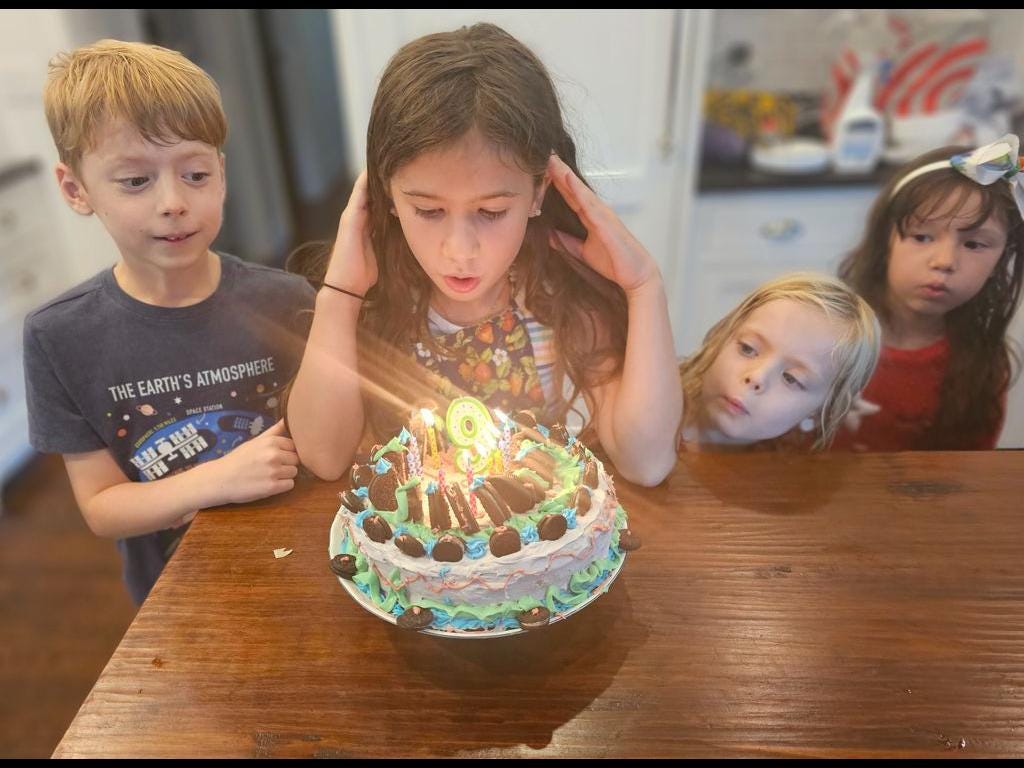
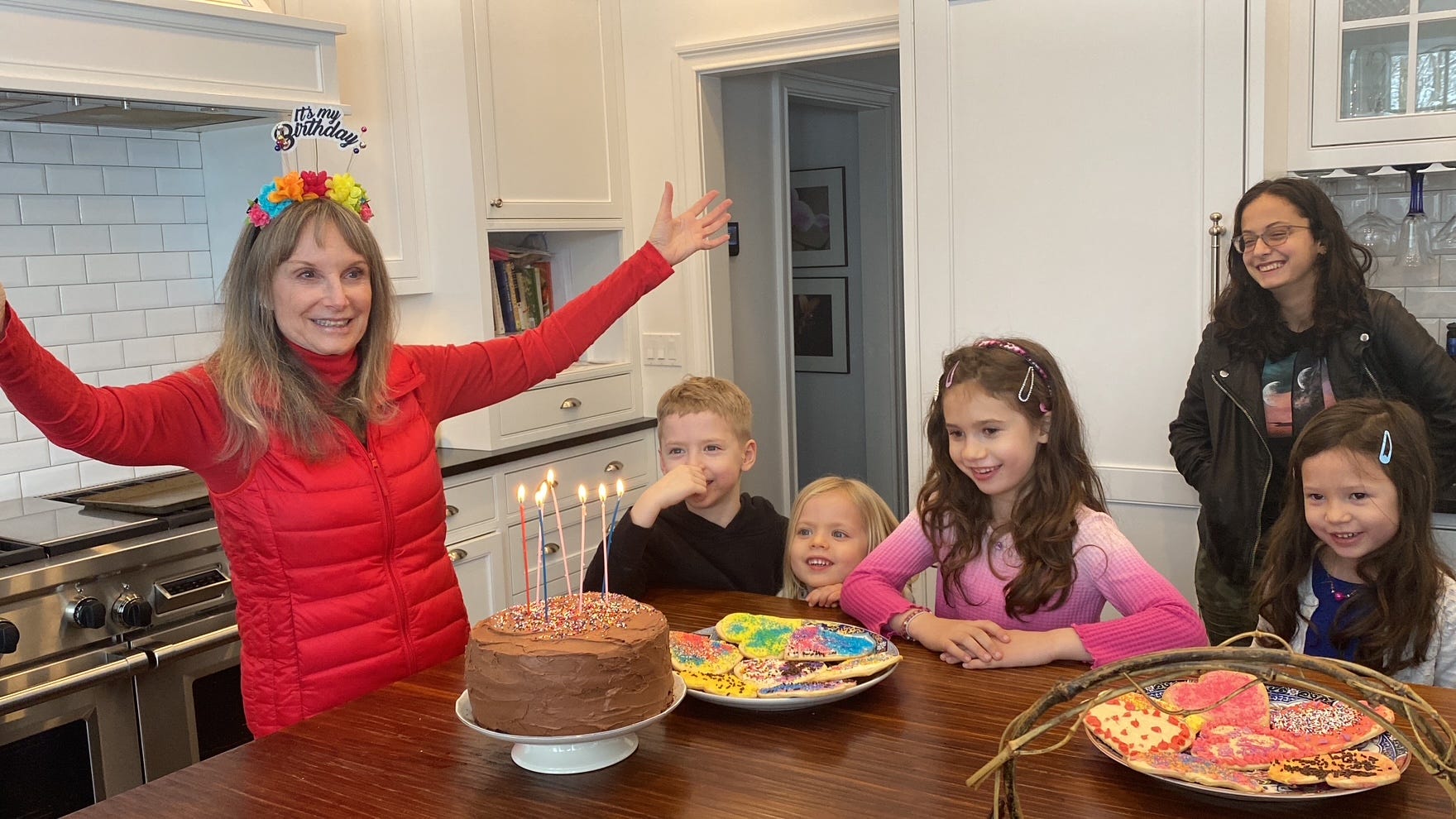
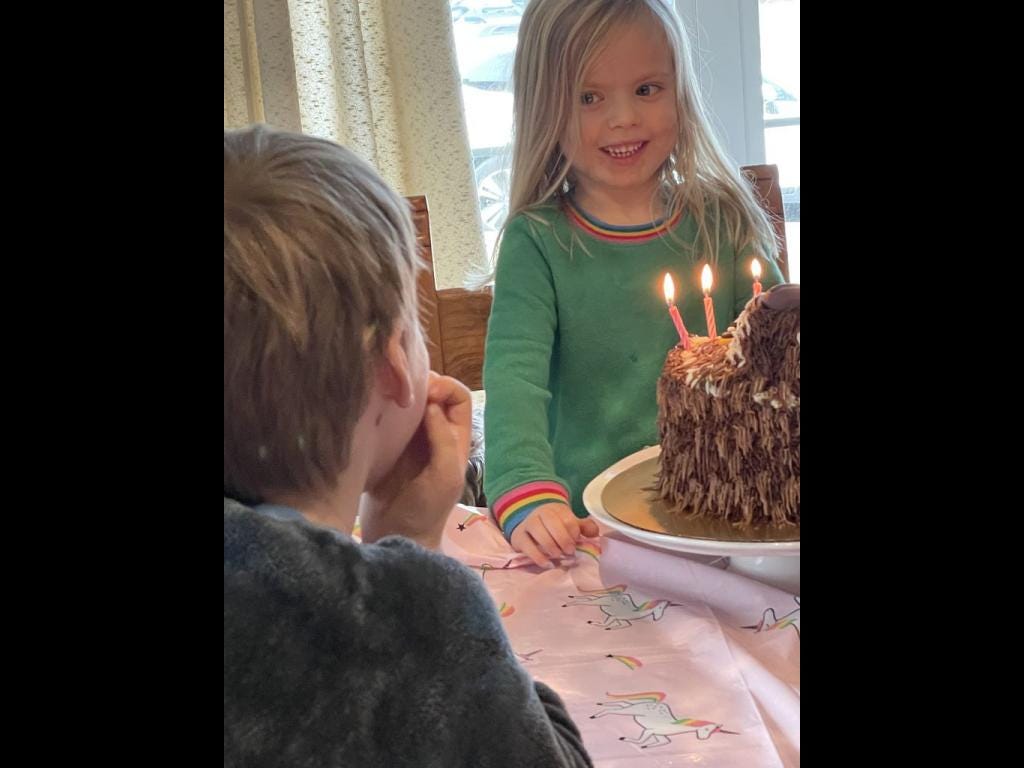
Not just a baker. This:
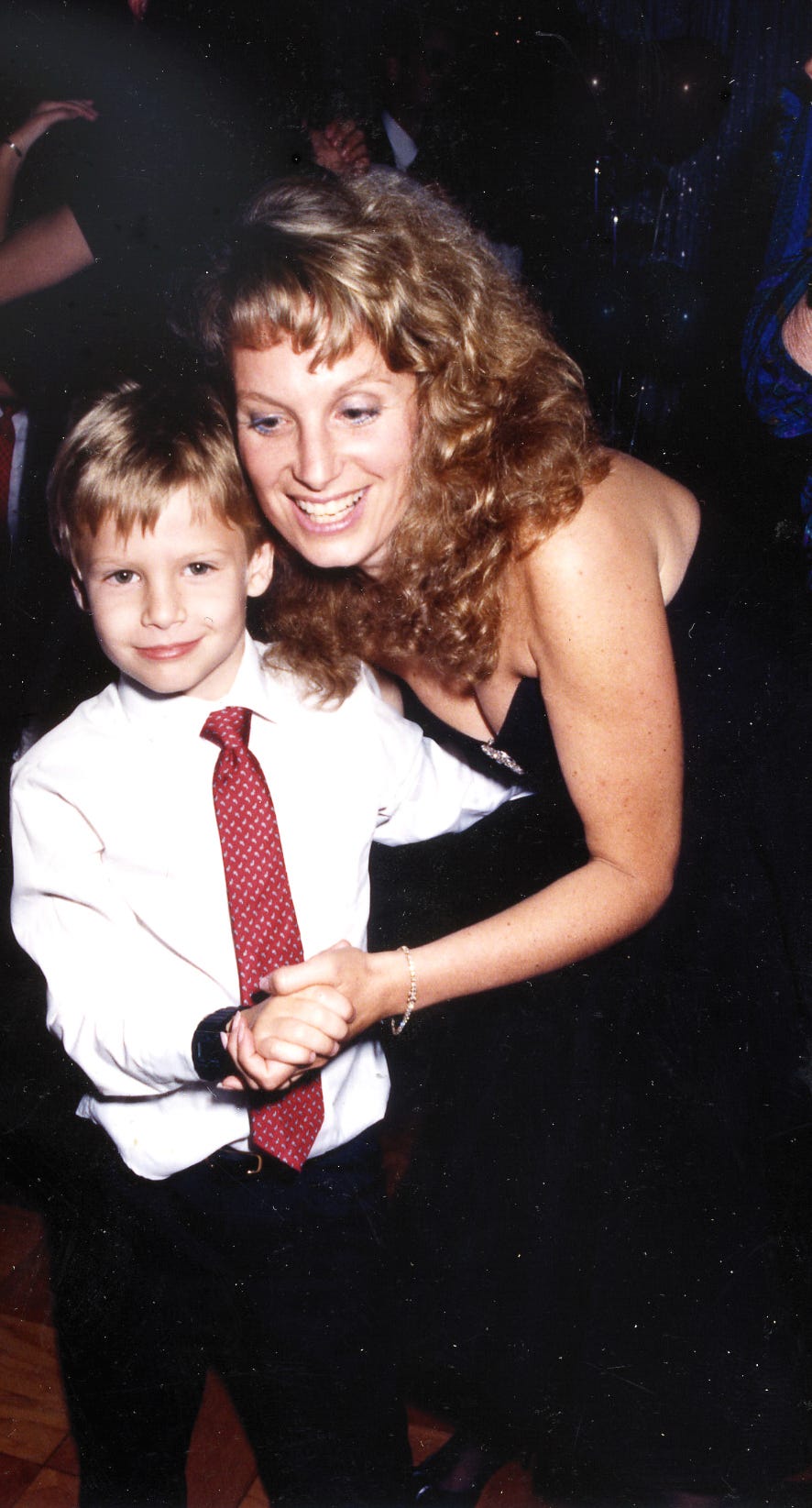
.
Or this
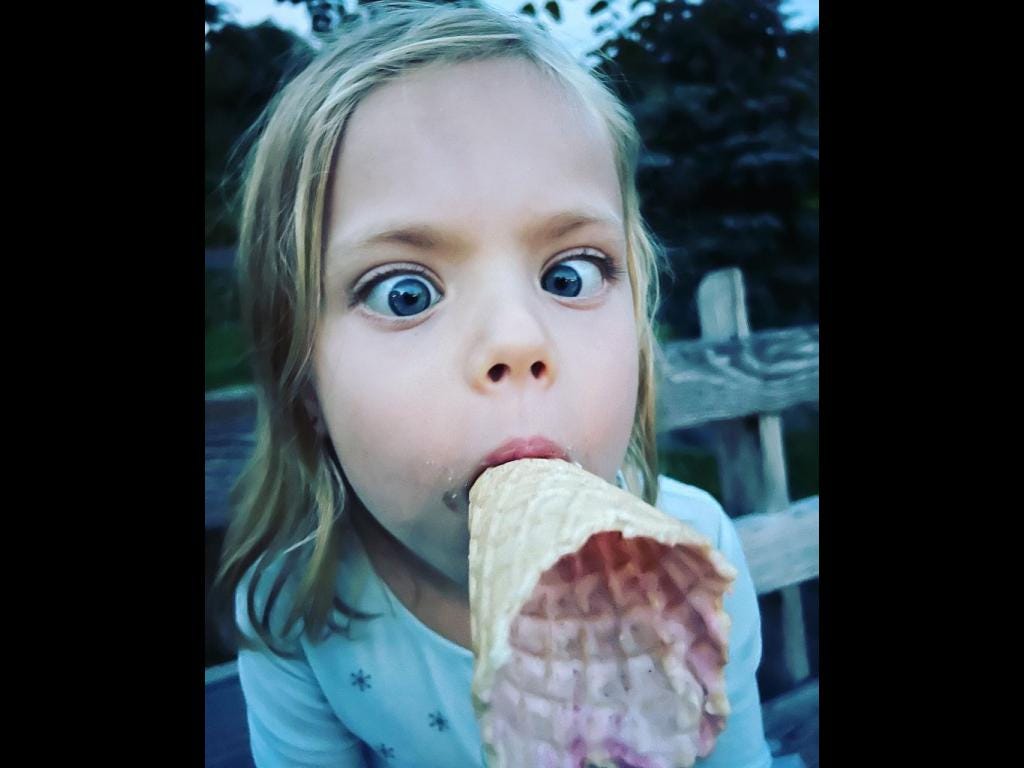
Below, is the daughter of the little boy above who was dancing with Mom.
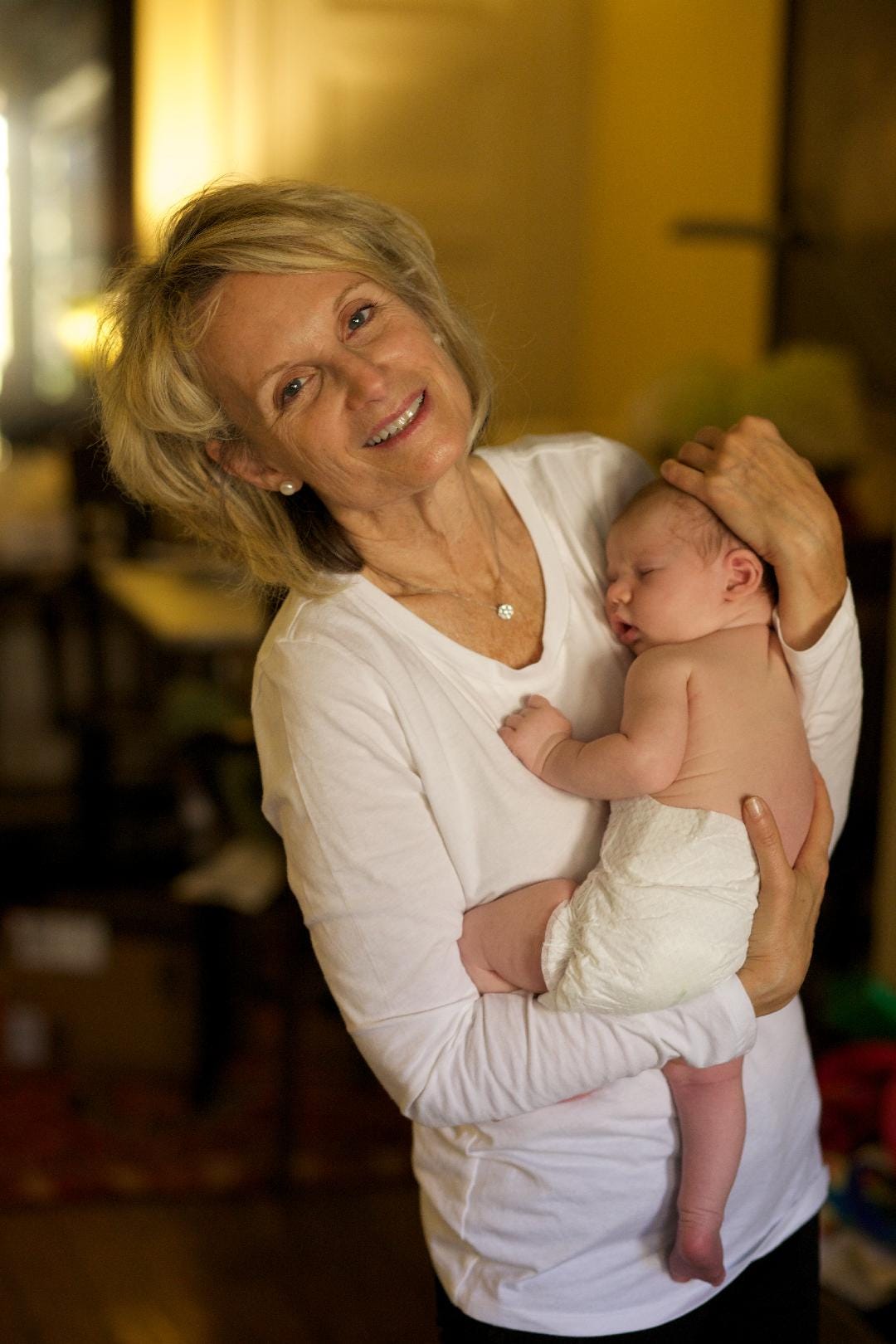
And that baby becomes this, third from the right, with her sister and other grandchildren
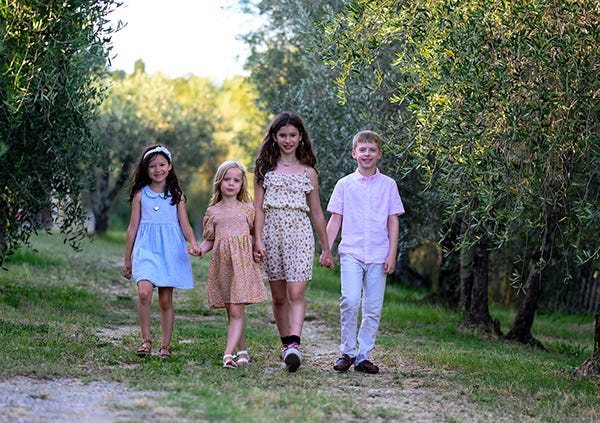
Yes, this is supposed to be about autism, and I, as usual have gone over the top, but this is also an article defending motherhood and what should be recognized as truly creative. The whole process is a miracle that has blessed not just my family, but anyone taking a chance on creating life. Meaning several billion moms over many many moons, meaning eternally. Creativity meant children, not having a painting in MOMA
Let me once again hammer home my point. The powerful empathy springing from mothers’ hearts is driven by instinctual pressures. There are other, even opposite impulses and behaviors in every woman. But there is no other explanation needed to explain nurturing other than instinct. It has been reenacted for tens of thousands of years in tens of thousands of locations and cultures, and up and down the evolutionary ladder whch includes us. Its meaning is unequivocal. It can be veered away in the hands of ever changing cultural theories and attitudes. But fact is fact and eventually prevails. Women’s chromosomes won’t go away, regardless of the society expectations, which apparently can be all over the map defining what a woman’s life should be about, But that empathy, that desire to nurture is there for a basic biological reason, for the continuation of the human species, regardless of society.
What I am describing is obvious. It shouldn’t be surprising or need emphasis. Lions, tigers, cougar mothers guard their new offspring closely, all mammalian mothers respond to their new offspring before any other concerns. Bears will not allow a stranger to come close. A tourist with a camera can set off an attack.
A powerful mothering instinct exists in all higher forms of life. And not just mammals. Birds. I caught this robin which spent all day long searching our lawn for food and tending to its young ones. It never occurs to a robin to fly away after its eggs hatch, to seek individual fulfillment.
We do have Pampers and human mothers may go even further than other mammals responding to their baby. But almost all species will guard and feed their new born. As best as I can tell (correction invited from any biologist contradicting this) they do not check out all possible causes of their baby’s unhappiness and keep at it like humans. Or, perhaps the pups of other species don’t usually cry beyond having their hunger satisfied. They actively seek out the teet, and that is almost the entire focus. Compared to other higher animals we are atypical in the complexity of our care, the many facets that our advanced brain blesses our offspring with our prolonged care. We are also unique in another way. Around 18 months toddlers have expectations placed upon them. This is the beginning of the conflict for all of us. It could be coincidence, but I have wondered if this has anything to do with autism, whether regression can occur in reaction to the considerable stress that occurs from having to go against the child’s will, to an autistic state, blocking out others, but I will admit this is a wild speculation.
Let us drop, for now, these provocative cultural issues and return to describing what is happening to the baby. It is in the grip of the moment. Poets may extoll an infant’s bliss, as its hunger is satisfied at its mother’s breast, unaware of any maybes that might trouble it, as it fades off to peaceful sleep. We are stirred by the baby’s tranquility, its innocence, its oblivion to the troubles that will one day confront it. But if we grant this purity when satisfied, in the beginning, the same is true of its misery, its helpless panic. Now is now. The cry of an infant desperately needing its mother is heard clearly, because it needs to be heard and reacted to.
Although the infant, at first, has no understanding of who the mother is, as Mahler describes, if all is going well, the day after day calming connection between them has the beginning of coherence. Eventually, the baby quiets when she hears the mother, looks for its mother’s eyes as it is being held. A gentle touch, her soothing voice, the warmth of her body forms the foundation of the infant’s connection to the world. If she (or in modern households, he) has successfully built this relationship with the infant, the frequency of the baby’s terror, and its intensity become less and less. Those many moments of care, contribute to the infant’s developing a sense of safety from its relationship with a person. Eventually the mere sound of her approaching, her mellow voice calling out the baby name’s can initiate calming. The horror (being emphasized by my description) may be subdued. I tend to be a glass is half empty person. So, to correct that, let us not ignore the many moments of pure delight, of play and smiles. Mothers, as much as fathers, like to get a giggle. Fathers, in particular, often aim for that. They like to play with the baby. Their affection is real. Then when the crying returns (in not too long) it is back to mom.
In any case, broadening our focus on what is going on. Our nice little Mahler idealization is complicated by reality. In the intense beginning I’ve described, mothers desperately need far more sleep. Being able to stop its baby crying may be urgent, but so may be the need of a mother to talk to a friend, to get out for fresh air, to escape mothering, to rest. The baby forces its mother to ignore her exhaustion. Some baby’s crying is relentless. Yes, there are certain babies that are very easy, whatever the reason. But this is relatively rare. Most babies require an enormous amount of work. More effort than almost any other chore a woman may have in her life. Yes, there are wonderful moments, but is not fun. And there is no paid vacation!
But let us revisit what this article addresses. In some cases when the effort seems to be going unsuccessfulIy, a mother may be tortured by her inadequacies, deserved or not. Sometimes, children later on, recognize that their mother ‘s pride and joy stems from the sacrifice they made. A child’s understanding of the debt they owe can cement their closeness. However, if later on their relationship has gone too far south, children can resent the payback expected.
In a storybook version of the relationship, a mother expects very little. Her job is to enable a child to leave the nest, leave parents behind and fly away to their own life. Boys typically do this more often than girls. But either way, mothers are human. They may sometimes resent how little, what they have done, is appreciated. Yes what they have done, not only for the infant but the years and years of parenting, is their job. Mundane compared to the masterpieces in museums. But focusing on its essence, it is also not too different from someone who has saved another’s life. Both mother and child know that has occurred. Almost all children recognize the power of their mother’s love, and other than the brief euphoria of romantic love, may never quite find it again in later relationships. But it is equally true that the problematic nature of this relationship, the desire to break away can lead to many difficult hours. It is probably less of a dramatic issue than the rebellion many children struggle with defying their father’s demands and authority, but in this article we are describing the earliest relationship that can go awry, between a mother and her infant. Having puffed up the glory of mothering let us return to reality. There are mothers who might describe these months of nurturing as imprisonment, torture with no redeeming qualities. I assume every mother has had that thought from time to time.
Whether mothering goes well, or very much less than well, its intensity is universal. And despite my tendency to overdramatize, (and yes reiterate) mothers are not saints 100% of the time. Some not 50% 0f the time. Some not 10%. Some mothers of newborns freak out from the demands being placed on them. Some mothers, fortunately few, are abusive. Their anger towards the infant is acted upon when the crying goes on and on. Read police reports of how horrible it can become. But similar feelings occur in a good many mothers even if they would never act on them. They may not admit it to others or even to themselves. But on some level it may take its toll. They may feel tortured for reasons they don’t understand. Inner conflicts between expectations they may have had, or that society demands, may be wonderfully pure. But greatly differ from their actual reactions to their baby. They might successfully overcome their ambivalence consciously, but their self deception can only be maintained for so long.
20% of mothers develop postpartum depression. If the resulting depression is severe enough, the mother’s ability to function and meet the infant’s needs may be impaired, many times dramatically. To explain postpartum depression, biological psychiatrists forward theories about hormone changes in pregnancy, and other biochemical occurrences to account for it. The evidence is weak but we can’t disregard this perspective. Chemicals in the brain may be a factor. But, arguing against this idea as the exclusive explanation is the finding that fathers who are the primary caregiver of an infant may react to the extreme demands expected of them similarly . They have a prevalence of depression that doesn’t markedly differ from mothers. In other words psychology rather than biology must be considered.
As I noted, it was believed that autism results when this problematic time of life doesn’t take place as well as it should. If a mother, again and again, is incapable of reading her infant’s needs , the child’s misery can overcome its ability to feel safe too much of the time, and serious problems result. No child totally escapes the horror of its beginnings. Some anxiety and fear will continue to be under the surface for even the most successful adults. Perfect mothering isn’t possible, any more than life is invariably always kind to us. But “good enough mothering”, a term used by Donald Winnicot to describe what happens in the real world, is what usually occurs. Some babies are born with more fear, more needs. That may be a genetic characteristic. Some babies have terrible cramping, or other pain and discomforts, that even the best efforts of a very good mother can’t calm.
The relative rarity of autism means that the inevitable failures that are part of every baby’s experience aren’t catastrophic. But if things have gone very poorly too often, the infant remains in its own frightening world. As noted earlier, autistic children eventually comfort themselves in atypical weird ways. Almost any disruption in constancy, the slightest change startles them. Trying to maintain uniformity, they rock back and forth, make funny sounds, flap their hands, later count, memorize numbers, do math problems, ritually deal with their anxiety with repetitive behaviors as if their mother nor anyone else exists.
However
To reiterate, Leo Kanner, who first described autism in 1943, was struck by how these children were practically identical to children with “hospitalism” a condition Rene Spitz had found in infants raised in institutionalized settings, without care from a mother, fed but unloved. Kanner used the term refrigerator mother to explain what had gone wrong in more normal settings.
According to modern experts in the field, the ideas described above have absolutely no connection to autism. Zero! They are certain that psychological factors don’t play a role. Today, the description presented above, the beliefs of the former “experts” are considered a myth created by a generation of clinicians blinded by outmoded Freudian ideas. Autism is biological- End of discussion!
Although modern experts readily admit that the biological causes of autism are unknown, and some ideologues like Secretary Robert F. Kennedy come up with wild hypotheses, almost everyone in the field is certain that the illness is exclusively biological. It goes beyond certainty. They don’t dare make the suggestion that psychological factors play any role. It could wreck their career to suggest research into causes of autism that aren’t biological. How is that possible? There is a story behind this.
At the height of the belief that autism was caused by psychological failings, Bruno Bettelheim, a Viennese psychologist, who ran an inpatient treatment facility in Chicago that specialized in the treatment of autism repeatedly used Spitz’s term, refrigerator mothers, to describe the mothers of autistic children. He was widely read, a brilliant and seemingly empathic author that seemed to understand the child’s world and needs. He wrote The Uses of Enchantment, The Meaning and Importance of Fairy Tales, A Home for the Heart, Freud and Men’s Soul and other books that were well respected. Bettelheim’s voice, his ideas won over America. He became a celebrity intellectual, quoted in the finest journals and in popular culture. Advice on how to raise children is of unending interest to parents since every parent is fully aware of their many blunders and how little they (or anyone else) understand what they are doing. That will never change although fashions in child rearing come and go and are always treated seriously. Time magazine interviewed Bettelheim as did Dick Cavett. He won the National Book Critics Circle Award for Criticism[18] and the National Book Award in the category of Contemporary Thought.[19] People eagerly sought his ideas. Writers quoted him freely to support their arguments about what should and should not be done raising children.
And then a pin was stuck in Freud’s balloon in the 70’s. In the minds of many, for decades, psychoanalysts had been accepted as gurus, knowing everything important about human motivation. That ended as it should have. Belief in their omniscience served a need we all have that someone fully understands behavior. But once the myth was destroyed, one weak idea after another of Bettelheim was pointed out and some deservedly ridiculed. Freud made huge discoveries, as did others, looking into the depths of human motivation. All of it was tossed aside. More and more Freudians were considered dinosaurs, as well as Sulivanians, Jungians, Horney advocates, not to mention eclectics and those with other thoughts. They were relieved of their academic positions, replaced by biological psychiatrists at medical schools. Bruno Bettelheim, in particular, was mocked. Other than Elon Musk I know of few others who went so rapidly from legendary hero to villain. Every rotten detail about Bettelheim was exposed, including that he didn’t have the training and degrees he claimed to have. He was a monster. It was said that he hit children under his care. He supposedly told the children at his institute that they were there because their mother didn’t love them. Dozens of Bettelheim’s deceptions were revealed to the public in article after article, including that he falsified his treatment successes. It was also noted that few of his patients actually were autistic, an issue that continues to be relevant in what is being called autism. His followers went into hiding. Few dared to defend him. After he died years later in 1990, the attacks got even worse. Colleagues described how everyone’s feared him, including staff members at his institute. They described the relief they and the children felt whenever he was out of the building.
I assume Bruno Bettelheim was not a nice guy. Moreover, psychoanalysis needed to be thrown off its throne. When analysts dominated mental health thinking they were far from gods. Although many of their theories and descriptions are still very relevant, they weren’t close to being angels. Despite the need for many more practitioners to treat painful emotional states, they had set up a monopoly that limited the number of analysts who could do therapy. And back then only analysts were considered competent to do therapy. They developed numerous strict rules about how treatment should and should not be done, and who could and could not practice. Those rules about proper therapy technique have been turned upside down in recent years. New trainees are taught the exact opposite of what had been taught to me during my training. For the most part, analysts wanted nothing to do with the insane, the traditional focus of psychiatry. Their clientele were predominantly from the privileged upper crust of society. Critics called them the worried well. They were as closed minded about biological treatments and ideas as biological psychiatrist were later to treat psychological influences. For years they maintained that medications, which could alleviate much suffering, interfered with treatment because suffering was a needed motivation to get well.
Differences in perspective are expected in any field which is poorly understood, and our understanding of mental illness even now is minimal, compared to what is needed. But the disagreements in psychiatry led to schisms, to intolerance and disdain for the other side. Sadly schisms exist in science as much as in politics today. This continuing rigidity blinds those looking for answers.
There are probably a thousand unlikable qualities that Bettelheim possessed, emphasized by those who apparently hated him, and that influences how much we should trust his ideas. But if we leave aside ad hominem attacks on him and the analytic profession, there is much to gain. The worst part of Bettelheim ideas was the accusation that “refrigerator mothers” caused autism. It wasn’t only autism. Analysts blaming parents for their patient’s difficulties were common in the 50’s and 60’s. It still characterizes too much of what is called therapy. But the verdict was particularly harsh about autism. Not only did the mother of an autistic child have to suffer with the child’s disabilities, she was blamed for its illness. Many of those mothers loved their children and still do. It is understandable that those who blame them are seen as cruel. A good part of what has vetoed any research into psychological influences on autistic children was the heartlessness of Bettelheim’s attack. No self respecting researcher dares to consider inadequate mothering. It would imply consorting with the devil. But completely ignoring psychological issues is nonsense.
There is unquestionably a genetic component in some cases of autism. Those cases are not rare. If one identical twins is autistic the other is extremely likely to be autistic. They share the same genes compared to fraternal twins who only share half of the same genes. In that case their concordance rate is much lower. Since both types of twins share the same environment, the evidence is persuasive that heredity plays a role. However, disagreement remains about how many autistic children are born that way, regardless of environment. Also confounding the theory, in many cases one identical twin is autistic and not the other.
Part of the problem is that what we mean by autism is very confused. The original description of autism, which was based on children like the one presented initially in the video for this post, has been vastly expanded with the idea that there is a spectrum of less severe autistic symptoms that are (presumably also genetically) related. The idea that diseases exist in a spectrum of severity is sound. Every disease has milder and more severe forms. So this way of looking at it is plausible. I mentioned Temple Grandin. There are many like her. They have the real thing and have somehow managed to function. However, this expanded view of autism turned into a nonsensical inclusion of all kinds of socially unaware behavior that has nothing to do with the malady seen in the video.
With this newly defined version of autism, subsequently, the number of children diagnosed with autistic spectrum disorder has exploded. When it was first described it was considered to be rare. Even the prevalence of the “spectrum” disorder in the U.S. was estimated to be around 1 in 150 children in 2000, rising to some 1 in 36 children in 2020 and to 1 in 31 in the latest CDC report. Rates ranged from 9.7 per 1,000 children in Laredo, Texas, to 53.1 per 1,000 children in California. We have been alarmed enough by this increased population of disabled children so that 5.1 billion research dollars have been spent desperately trying to find an explanation, all to no avail. Whether the increase in cases is a real phenomenon, or whether it is due, as advocates argue, to better screening for the disease is an important consideration. Or whether, as I maintain, what is being called autistic isn’t, one thing is certain. If we continue along this line of thinking, accept there has been an enormous increase in the number of children with autism spectrum disorder, it cannot be explained by genetics. Parental genes could not have been altered in massive numbers. By this logic, the explanation must be environmental, meaning to enlightened researchers, other biological factors.
Biological conjectures have been numerous, but the scientific findings have been meagre. Diabetes during pregnancy increases the chances that the child will be (what is being labeled) autistic from 1 in 31 to slightly above that. Viral or bacterial infections during pregnancy, air pollution, maternal obesity, lead intoxication, –let’s see– global warming, over processed foods, pesticides, preservatives, recently Tylenol during pregnancy–the list is as long as the exuberant imagination of those who warn of the poisons surrounding us in the modern world. And this list of environmental factors doesn’t include the anti-vaxers who are certain research will confirm their theory. Explanations for the increase have been as nutsy as many of the wild speculations about health populating the internet. But almost all the ideas are biological. And to reiterate, what is considered “autism” has been wildly increased (and not sufficiently challenged!!!!!)
There is an increased rate of autism in children of engineers. It is assumed that engineers, who often tend to be socially obtuse, are that way because of autistic like genetics that they share with their children. No one has dared to suggest a different explanation, the possibility that those who readily turn to cool headed logical reactions to distress are likely to be more insensitive to emotional cues from their infant.
It isn’t only in the study of autism that biological psychiatrists have done their best to discredit psychological thinking about psychiatric disturbances. Sometimes, that effort is unequivocally corrupt. For instance, the billions of dollars invested in medication by the pharmaceutical industry to treat mental illness makes psychological thinking destructive to their bottom line. See The Myth of Scientific Psychiatry for a concrete example of this kind of distortion on a massive scale. In a represented case cited there, McNeil Pharmaceutical tried to eliminate all references to psychotherapy for the treatment of ADHD in Dr. William Pelham’s article on Concerta for the journal Pediatrics. Despite his strong objections to the change they were trying to make, they were able to successfully eliminate it. The reason for this change in his article was clear. As a purely biological disease ordinary pediatricians could comfortably prescribe Concerta for ADHD without requiring mental health knowledge. The myth of chemical imbalances (discussed elsewhere) was a powerful sales tool.
But unlike ADHD, autism is not primarily treated with pharmaceuticals so that can’t be the motive here. I have to assume that the polarization that has characterized the warfare between the nature vs nurture camps is the main factor. And there the laws of human motivation are predictable. The first casualty of war is truth. What we have been witnessing in politics in America, the out and out lying, taking statements out of context, demands of loyalty to group think positions- WARFARE occurs among scientists just as it does with politicos. It is understandable that those in the biological camp have wanted revenge for the way they were treated by psychoanalysts, when analysts sat on the throne. And the righteousness of their dismissal is understandable given the cruelty of Bettelheim’s refrigerator mother hypothesis. But the turn against psychological factors, in what is being called autism or ADHD , or some other name, the certainty that all of our fucked up kids, our spaced out, frantic, easily bored when challenged, social misfits have a biological illness (with a name) is not just a rejection of Bettelheim’s ideas, nor Freud’s nor psychoanalysis, nor conventional ideas about child rearing. It has become the prevailing certainty. There haven’t been attacks on Margaret Mahler’s observations. But she is simply ignored. It is as if the battle is over.
Turn to any source of information about autusim, the NIH, CDC, The American Brain Foundation, Autism Science Foundation,, the website of the Cleveland Clinic, New York Presbyterian, the Mayo Clinic and so forth. It doesn’t matter what psychological perspective might be useful trying to make sense of autism, psychoanalytic or any other. It is all irrelevant. Considering psychological factors as the cause goes beyond dismissing it as an old fashion idea. It isn’t even mentioned. The newer generations of scientists did not experience mistreatment from psychologically oriented therapists. They have simply been taught that psychology plays no part in autism and this agreed upon truth has gone unchallenged. Those who mention it are dismissed with a reminder of the refrigerator mother theory implying they might have evil ideas. And by the way, here they are not describing exclusive biological etiology for the very severe form of the illness, but the spectrum behavioral problems which I don’t consider autism. And very likely this group of problematic chidren are very related to how they have been mothered and raised later on.
Despite the appropriate modesty about how little we understand, the certainty that psychological issues are not involved is the original reason for this article. For those in charge of how research dollars are to be spent, despite the complete failure, so far, of biological and genetic findings to explain “autism” I very much doubt any money would be allocated for research targeting psychological factors.
The everyday assumptions of people who are not experts about the importance of mothers’ relationship with their newborns
Let us leave aside the ideological straight jacket of professionals in the field. In practically every society most people consider the earliest interactions between parents and their newborn, crucial. They don’t need Mahler’s description and theories or Harlow’s monkey experiments to know that efforts to protect and nurture an infant go beyond keeping the baby alive. The difficulties of this relationship are understood.
As noted, the intensity of emotions, the frustration and guilt when unallowable feelings emerge, may translate into a severe depression or anxiety. I have been describing, even in the most ideal early months, mother and child rarely exist in la-la- land. This is not news to any mother who has gone through it. And certainly a mother who has had post partum depression will never forget how terrible those months can be, and that help often is needed. When extended families living together was the norm, grandmothers, aunts, older cousins and siblings often stepped in as needed. And for those who could afford it, nannies were often hired to help out. We celebrate the freedom and supposed independence of modern individuals, but from my reading of individuals today, the loneliness and desperation, the need for group think, and the belief that government can provide a solution, is part of modern insanity. No matter how consistently governments do a lousy job of providing solutions they are turned to again and again so that politicians can be blamed for the inevitable failure.
Today, with both parents working, fathers frequently share the responsibility. Because the difficulty is understood, many places of employment offer time off after a baby is born. A wide understanding of the difficulties has led to a political push in prosperous societies for guaranteed maternity (and sometime paternity) leave as a basic right. It isn’t so that they can relish this wonderful time. It is because it is widely understood to be a time when help is desperately needed to properly get new human beings off to a decent start. To hold down a demanding job and nurse a baby is practically impossible. The point I am repeatedly expounding is that this is a crisis time in life. Some, perhaps most, handle it beautifully. Some don’t, and for some it may be disastrous. The modern answer is day care. To maintain the relatively recent luxurious life style of middle class America, couples have grown accustomed to women working to supplement their partner’s income. In the 1940’s and 50’s, when I was raised, abandoning infants so that the family could enjoy 2 or 3 TVs, several computers and phones, 2 cars, eating out often, decent meals delivered, 5 or 6 or 10 dolls, an amazing array of toys, all of what is now considered basic necessities, sending a mother off to work to supply all of this would have seemed a strange priority. But as they now say. It is what it is. Or else, the government can solve the whole problem. Not that it will allow mothers to stay home permanently. It will allow maintaining the lifestyle of middle class Americans to remain where it has been.
It should also be noted, at this point, that most parents have never heard of hospitalism, but intuitively they struggle with the idea of whether or not day care is a good idea for their infants. How can a stranger, or several alternating strangers at drop off places provide the love and nurturing that parents provide? Certainly, at some day care centers there are workers with an exceptional desire and ability to mother, but there is bound to be many where the care is at best okay, and many where it is less than that. That is leaving aside the fact that the workers doing the mothering may constantly change. I cannot imagine what the workers will be like in a huge governmental agency.
A 2014 Pew survey found that 60% of Americans think it is best for children if one parent stays home. And a March 2013 Pew study found that just 16% of parents say having a mother who works full-time is best for children. In 2000, Public Agenda surveyed parents with children five and under, and 63% disagreed with the following statement: “A top-notch day care center can provide care as good as what a child would get from a stay-at-home parent.” Public Agenda also found that 80% of young mothers ages 18-29 — women who grew up when mothers worked outside the home and nonparental child care became more commonplace — say that they themselves would prefer to stay at home to care for their young children rather than work full-time.
Despite the concerns of hundreds of thousand of mothers about being at home for their children, with the huge number using day care centers for very young children, considering the explosive increase in what is being called autistic spectrum disorder, there has been no study of whether this disorder is more common in infants cared for in daycare centers. Studies have shown that infants placed in daycare center between two and four have social difficulties later. But other studies, for instance , have not shown a significant problem.
Regardless, many, perhaps most people sense that recent generations have too many subpar citizens, and lost poorly motivated children. The internet is being blamed, but is that the entire explanation? The surprising thing, one of the points of this article, is the lack of curiosity, the absence of studies trying to specifically link the increase of what is being called autism to daycare, and inadequate mothering. It is a study that could easily be done, without using the no-no term, refrigerator mothers. We are talking about a continuum, to degrees of failure, regardless of effort. Of course, part of the problem has to do with what equipment a child is born with, their genetics, and part has to do with failures in mothering. And if the government takes over child care all bets are off. In the case of mothers doing their best, failure needn’t imply villainy, merely that better understanding failures, points the way to what has to be corrected. Certainly a culture that doesn’t value and priorioritize mothering is a society without a future. The absence of studies is the result of the certainty (to the point of it being a forbidden idea) that nurturing factors play any role at all. For 30 years everyone writing about autism stressed psychological factors and then the flip flop. The kind of black and white thinking that characterizes schisms rarely approximates the grey truths of reality.
Granted, calling the mothers of these children refrigerator mothers, turning them into villains, infuriated those who turned against Bettelheim, and thinking in that direction might suggest being complicit with his nasty ideas. The danger of being thought of that way eliminates many people’s curiosity. Yes, a genetic factor may play a role some of the time. But psychological factors should not be totally overlooked. There has been so little successful research linking genetic and biological causes that there should at least be a group of scientists curious about other possibilities.
There are so many studies needed that could be done. Put aside “refrigerator mothers.” What about the one in five mothers with postpartum depression, which would interfere with a mother’s emotional responsiveness. It turns out there has been study of that and there is an increase in Autistic Spectrum Disorder in mothers who have had postpartum depression. However, the study turns to biological explanations for the correlation. For example here is one” (“PPD and ASD may be different consequences of exposure to inflammation and/or dysregulation of cytokines and hormones during pregnancy. If that is the case, then it would be expected that these conditions would co-occur more frequently than what would be predicted by random chance. Previous studies have demonstrated that dysregulation of biomarkers for inflammation,96, 97, 98, 99 hypothyroidism,100,101 and neurodevelopment71,101,102 are associated with increased risk of both PPD and ASD symptoms or diagnosis. Recent studies have also suggested that low concentrations of allopregnanolone (AP), a neurosteroid that has a key role in the development of PPD103, 104, 105 and is now approved by the US Food and Drug Administration for treatment of the condition106 may also be part of the pathophysiology of ASD. A combination of clinical-, animal-, and laboratory-based studies are needed to explore these possible biomarkers and their potential role in the observed association between PPD diagnosis in the mother and ASD diagnosis in her offspring.”)
Nowhere is the suggestion made that the mothers’ depression had any effect on their ability to be emotionally responsive. How about mothers who have been physically disabled from a car accident, or develop MS or some other serious malady? No studies. Mothers who have been physically abused by their husbands? No studies. In the first year after a baby is born 20% of parents get divorced. No correlation studies. Children removed from their parents because of abuse. No studies Yes, many suffering mothers can overcome difficulties and be there for their infant no matter what. But a study with large samples might reveal something real. The studies aren’t done because there is almost total agreement that child care plays no part.
A huge percentage of children placed in foster homes have autism. I could not find a study of the negative effect of foster parents (who can be fine but proportionately more of them are inadequate than biological parents, so something might show up statistically) The explanation given for this huge number of foster children who are autistic is that their parents gave up on them in greater numbers because their autism was so difficult to handle. They also typically move from foster home to foster home for the same reason.
(Apologies in advance for repeating my earlier arguments) which carried on about the importance of mothering. Culturally there has been a huge shift, from idealizing mothering qualities (sacrifice, the desire to comfort, to put others needs above one’s own) to an opposite standard of what should be admired in a woman. Being more aggressive and self protective, breaking out of the old expectations that prioritized sacrifice, in modern lingo not being a patsy, undercuts what was once culturally emphasized, pride in nurturing capacity. When career accomplishments are more prestigious than being a mom, it would not be surprising if there is a change in the nature of how children turn out. Of course, there are still a great many women, like my wife, who feel proud and take great satisfaction in their nurturing efforts and abilities. Like her, raising happy, healthy, motivated children is their most important accomplishment. Nevertheless, there are now a great number of women who consider her values antiquated, including our college age grandchild. Her ambition and satisfaction, true to the Pew survey now comes almost exclusively from her anticipated career, travel and friendships. She wants to enjoy her life. Being a mother is not on her list of priorities. And from what I can gather. It isn’t for her friends either. Of course, she and her friends are young and it may change, but in my generation settling into family life came first. Yes, there were some who were adventurers, and women very serious about their careers. But they were a minority, and not because women were oppressed. Being a mom was that high in their expectations. It is worth considering whether, along those lines, something akin to refrigerator mothers has resulted from this changed emphasis on what women should aspire to. Cultural attitudes are more difficult to study quantitatively. But it is not unreasonable to wonder if the enormous increase in children diagnosed with autistic spectrum disorder (ASD) is related.
On the other hand (!) the consensus about this increase in ASD seems to be that it isn’t real. It is the result of better screening. As noted earlier, changes in genetics isn’t possible since the genes of their parents cannot have changed. The difference in rates between Laredo, Texas, 9.7 per 1,000 children and California 53.1 per 1,000 children, according to this perspective has to do with the far more sophisticated public health systems in California. A National Health Interview Survey shows far higher prevalence of ASD (Autistic Spectrum Disorder) among more educated parents. 2.5 per 1,000 among offspring of mothers with less than a high school education to 6.1 per 1,000 among offspring of mothers with a bachelor's degree (Boyle et al., 2011). So the incidence of the disease depends on who is doing the labeling.
Is Autistic Spectrum Disorder real?
I have made my position clear. Autism spectrum disorder has nothing to do with Autism . Softening criteria for what is , and is not, an illness can lead to diagnostic jello. Elsewhere, I have criticized the legitimacy of too easily reducing patient’s difficulties to labels. Not just autism. Allen Frances and Joseph Sptizer who were the lead authors of DSM III and DSM IV warned about unintended consequences in developing new systems of defining illnesses. According to them, their new DSM labeling led to “pseudo epidemics of bipolar disorder, ADHD, and autism.” Suddenly every emotionally volatile person was being told they were bipolar, they had an illness related to genetically determined manic depression. Tens of millions of people enjoying the enhanced abilities speed gives users, have been convinced they have ADHD because it works so well. Something similar seems to be going on with what is being called autism. Today people love a label to explain their social difficulties. It removes blame and guilt for their failings. Their symptoms are beyond their control. They inherited them.
The actual fact is that we don’t have a very good handle on how much ASD actually exists in the population. The same is true of ADHD as currently defined. The diagnoses of each are meticulously defined by experts creating the labels, but in actual practice, clinicians often fudge quite a bit. Children have been known to be called ASD then ADHD then back again (I have discussed this in ADHD and Other Sins of Our Children Also see item 5 in the summary below) As for ASD, certainly, a large number of children and adults, with a variety of reasons for their shyness, poor social bonding, and insensitivity have been told they are “on the spectrum”. There is a site on the internet Famous People with Autism that lists Anthony Hopkins, Bill Gates, Dan Akroyd, Jerry Seinfeld, Albert Einstein, Isaac Newton, Charles Darwin, Emily Dickinson, and so on as having this disorder. This site alone points to how useless the label has become. Over and over we hear wives complaining about their husbands’ poor social skills and lack of interest in social contacts. They prefer TV, baseball, war movies to gabbing with friends. Their wives confidently label them as on the spectrum. Everyone assumes the term means something, that they have a mild form of a genetic disease. But that Jerry Seinfeld shares the same illness as the seriously disturbed children that have autism? That is preposterous. There is another factor that has made the diagnosis of the omnipresent spectrum disorders hard to take seriously.
Build it and they will come
It is estimated that 468 billion dollars will be spent in 2025 for autism care, up from 268 billion in 2015. It has become a huge industry! Thousands upon thousands of workers in schools, agencies, and government provide services, plus disability benefits to families. The budgets of school, social service agencies, all kinds of services, depend on having large numbers counted. Hundreds of billions creates a flood of diagnoses. At best around 25% of those diagnosed with ASD have severe illness, children who are clearly disabled. Even in those cases all kinds children with severe mental illnesses are called autistic, because as one parent explained to me, that is where the money is. There are many struggling children, as there always have been, and always will be. And they certainly need attention. But whether they have an “illness” best treated by an army of autism professionals is another story. I am very much in favor of giving help to children with mental disabilities. My objection is to call all of them autistic. Lumping them as a single illness interferes with our ability to study and treat what is wrong. It also leads to clowns like Secretary Kennedy and his nincompoops confusing things further.
Summary and final suggestions
First a comment about the repetitiveness in this article. I know I should spend the time doing a better job organizing and editing this post but I simply don’t have the time. I am busy writing about other things. I’ve published it anyway because the repetition and moralizing asides, it covers the topic in a useful way. So apologies but please take the rest of the article seriously. Here is the summary:
Autism like most psychiatric illnesses is poorly understood. The causes are unknown and what should, and should not, be considered autistic is wildly out of control. To cover up the inadequacies in our understanding, meticulously defined categories are created giving the impression of a scientific approach to the subject. No matter how precisely defined, it provides the illusion of scientific understanding that is not related to actual knowledge (which is pathetically minimal).
The original autism diagnosis describes a tragic horrible disease in which a child has been cut off from human contact. There is a spectrum of severity and some individuals with it manage to function. However, “autistic spectrum disorder” a huge and ever increasing group of people with social difficulties has been claimed to be connected to this serious disease for no reason that makes sense to me. There can be a variety of causes for individuals shyness, social insensitivity, geekiness and the like without connecting it to autism. Lumping all of it together into a soup makes searching for a cause a thousand times more difficult. The hundreds of billions of dollars spent annually for treatment and research has created an autism industry, which, though probably well intentioned, gets in the way of clarifying what is happening in our society that has resulted in so many disturbed children. Like the similarly wildly over funded money for medical care and learning at universities, it leads to an explosion of waste, inefficiency, and a system that is ridiculous. It is not completely wasted money. Disturbed children need our compassion. And on an individual level, these efforts often are constructive even if much of it is unrelated to autism.
In keeping with the “scientific” public image of the industry, biological factors are the only approach taken seriously. The results of billions of research dollars have been meagre. Yet despite the vast uncertainties about what is happening biologically, there is absolute certainty that psychological perspectives have no value. Reasons for that rigidity are discussed.
Although the huge incidence of disturbed children being labeled “autistic” appears to be growing and growing, there has been no serious questions asked about cultural changes in modern societies. By that I mean ideas about parenting, and in particular, mothering. In contrast to the past Mom has been devalued as a meaningful role for women. We do know that there has been a dramatic decrease in the number of children born, and that an enormous number of young adults no longer envision having a family as an ideal worth striving for. They are either not getting married or prioritizing women’s successful careers as more important than having children.
I’m not sure about the relationship of these cultural changes to true autism . But there does appear to be more youngsters tuned out, inadequately relating to others than in the past. Whether that increase of what is being called autism (and ADHD) is due to the changed attitude about nurturing I have described, there have been remarkably few studies of that possibility. There have been not enough studies of the effects of daycare, and other substitutes for old fashion mothers. The sloppy use of the autism label for the great variety of troubled children’s problems and the certainty that “autism” is only a biological phenomenon has interfered with curiosity about why so many children seem to be tuned out. Many have written about the effects of the internet being part of this, and I suspect they are on to something. But I am adding the additional factor, either daycare, or less “mom” mothering leads to inadequate connections in relationships , including, in the case of ADHD, an inability to internalize expectations (See my article ADHD and Other Sins of Our Children
In truth it may not matter at this point whether we consider what is being called “autism” predominantly a biological illness or due to parenting since so much is unknown. For now, no matter what we choose to emphasize we will remain the blind leading the blind. Most likely, the answer is not one or the other, but the particulars of how one effects the other. However, the answers are not irrelevant, since, at some point, a much better understanding of autism (the real illness) and the many pathologies being labeled autism, will improve treatment. We are unfortunately not there yet. Not even close. But it would help if some of the billions of research dollars spent targeted the effects of daycare since so many children are involved.
Leaving aside whether the problem is “autism” or some absence of needed bonding with parents and authority figures, some of the money flowing so freely for autism research, could pay for needed research on a host of problems our young seem to be having. As for thoughts about changes in our culture, one in which, in unprecedented numbers, young adults no longer favor mothering, this article, besides addressing “autism” is a plea for a reconsideration of our cultural priorities. Yes, I am 82 and predictably don’t approve of current ideas about parenting, but that said, my tangents in that direction are worth considering. It is for every young person to evaluate for themselves what their ideals and purposes should be. I hope they will think over how essential their role is in continuing the human race. Pride in their family’s name might also help, but that depends on valuing their family instead of buying into current dogma attacking family values as a bunch of stereotypes that must be overcome. Women’s freedom and individuality, their vocational opportunities are as fine as they are for men seeking the same. Ideally they can be accomplished alongside the priority I am placing on mothering. But we should acknowledge, in actual fact, the cost is often less quality mothering, or being a mother at all. A refocusing of the autism industry with greater understanding of psychological factors would be helpful not only for figuring out what is behind the apparent increase in what is being called “autism” but for greater understanding of how our children are being affected. This is a separate issue from whether or not we call what they have “autistic”
Temple Grandin, a famous person on the spectrum, describes a kind of phenomenology of thought that actually resonates with me, an ostensibly neurotypical individual, as I can choose to think linguistically, but find that cumbersome unless the task is to actually produce language. Usually, I think in a manner similar to what she describes, though I'd hesitate to call it "visual." It feels more "formal" in the Piagetian or even Platonic sense, really. In any case, the evidence is pretty strong that genetics plays a role in autism. Not for nothing, my wife reports a similar mental experience, she is also "neurotypical," though her half-brother is what most would describe as "Aspergers-y," and, as I mentioned, both of our children have autism.
She's a stay-at-home mom. We decided that from the get-go, knowing the research on attachment and child development, as I'm a school psychologist. We're engaged, bilingual, and doting/loving, arguably to a fault.
We're just a sample of four people, but our experience is pretty consistent with the current lines of thinking, and I think it suggests that autism is, as Grandin suggests, a kind of personality characteristic that can become pathological if in excess. I also feel that this mental experience might have a connection, and I'm disappointed there isn't more research into this. I'm glad the research has moved beyond "blaming the parents," though I understand this isn't exactly what you suggest. Rather, you're suggesting that specific societal trends fall into line with now-discarded theories that could explain the increase in autism prevalence. Again, we're an N=4, but it's not looking good for resurrecting that line of reasoning based on our tiny sample.
For what it's worth, my daughter is responding well to ABA and is making friends. My son is not yet three, and not presenting with language, though his limited babbling could be argued as a kind of proto-signalling, and he's starting to engage more in shared attention and sharing one's gaze outside of peek-a-boo. Time will tell what his and her ultimate functionality will be.